Early Beginnings of Gaming
The history of gaming dates back to the early 1950s when games like Tennis for Two (1958) and Spacewar! (1962) pioneered interactive entertainment. In the 1970s, arcade games like Pong introduced commercial gaming, paving the way for home consoles in the 1980s, such as the Atari 2600.

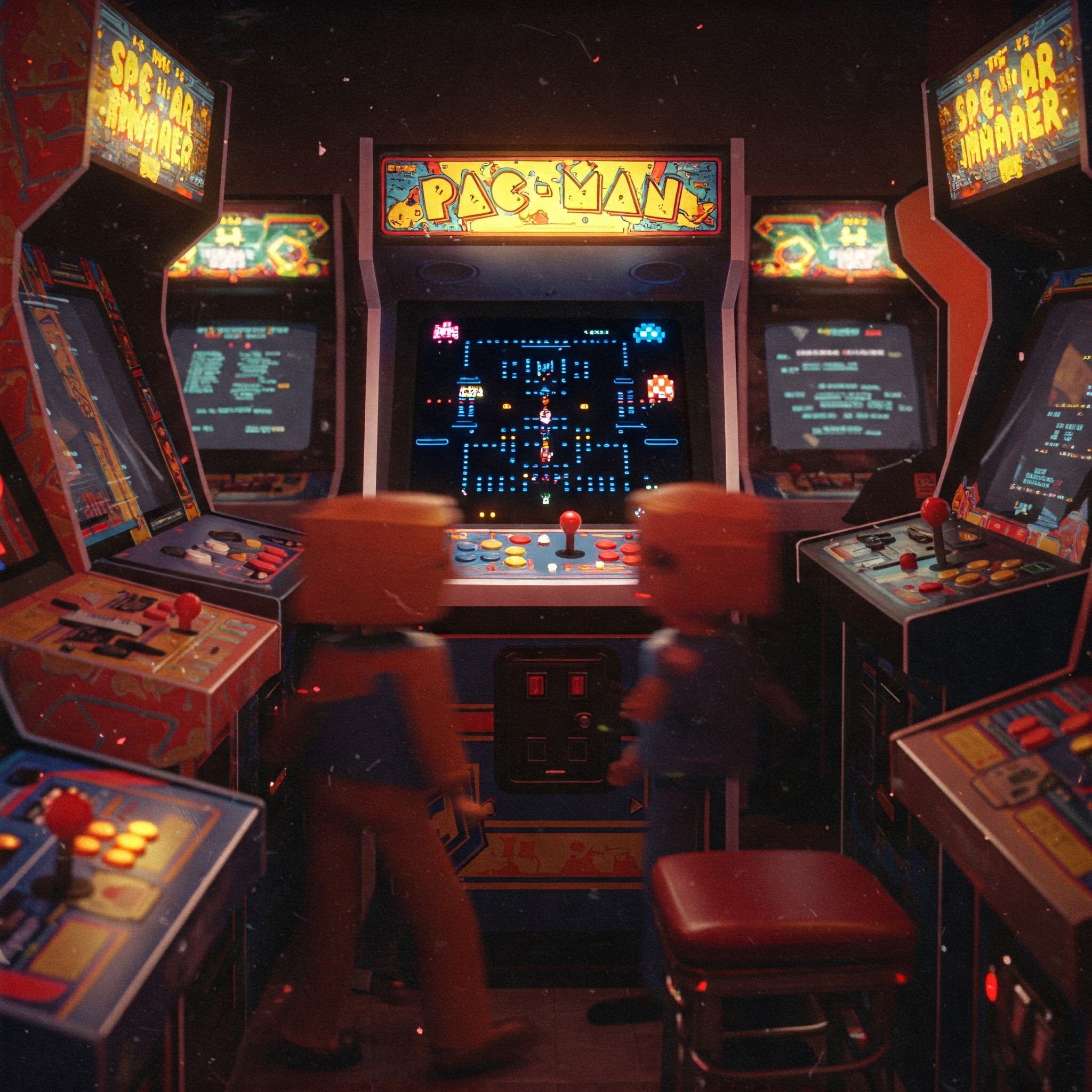
Early arcade games laid the foundation for the gaming industry we know today
The Rise of Online Gaming
The 1990s: Connecting Players Worldwide
1990s
The 1990s marked a turning point in gaming with the advent of the internet. The first notable online game, Spasim (1986), used early online services, but it wasn't until the 1990s that truly mass multiplayer experiences became available. Games like Doom (1993) and Warcraft (1994) allowed players to connect over local networks (LAN), setting the foundation for online gaming.
Early MMOs: Virtual Worlds Expand
Late 1990s
The late '90s saw the rise of massively multiplayer online games (MMOs). Meridian 59 (1996) and EverQuest (1999) introduced persistent virtual worlds with hundreds of players interacting in real-time, influencing future game designs.
The 2000s: Broadband and Global Communities
2000s
With the expansion of broadband internet, online gaming reached a global scale in the 2000s. Games like World of Warcraft (2004) and Halo 2 (2004) revolutionized online multiplayer experiences, making gaming a social, worldwide phenomenon.
The transition from local multiplayer to global online gaming communities
The Modern Era: eSports and Streaming
Today, online gaming is more advanced than ever, with esports tournaments, streaming platforms like Twitch, and mobile games all contributing to the industry's growth, creating a dynamic and connected gaming community worldwide.

The rise of esports and streaming has transformed gaming into a spectator sport